+All%27s+Well.jpg) Camberwell Now, what a band, what a moment in music, but what little splash they made! This CD, long sought-after by yours truly before it was finally reissued, compiles everything they recorded during their brief (1984-1986) existence. Now, here's a bias to lay up-front: I'm a massive This Heat fan, and I look to Charles Hayward as a magical musical force that did a lot for my own artistic and critical development. This Heat/Camberwell Now brought together a lot of concerns for me at just the right time in my life (my early 20's!). In the musical arena, they brought together ruthless sound experimentation with mindblowing musical chops - the balance is always perfect, as for every dazzling Hayward drum run comes some incredible use of musique concrete techniques. And lyrically, Hayward showed me that you can bridge fiery, political expression with poetry and the personal - I'd say that I now follow the "everything is political" philosophy, which is a great deal inspired by This Heat. So Camberwell Now was the somewhat more obscure followup band, whose lone LP The Ghost Trade I luckily scored from eBay about ten years ago, but whose other records remained unobtainable. The Meridian EP, which comprises the first 4 tracks of All's Well, is an open, tuneful Camberwell Now, and maybe the furthest removed from This Heat's post-punk caterwauls. The nautical theme is overabundant and years before all those midwestern indie rock bands started writing songs about boats, it's funny to hear Charles Hayward's approach. The trio format of This Heat, with Stephen Rickard on the tapes, is retained; what's different is that there's a more central rhythm, yet less rock structure here. It seems to emanate more directly from the intelligent 70s prog scene that Hayward came out of, but I think more of Rock Bottom than the Quiet Sun LP. Coming in the midst of Thatcherism, these songs about decaying empire and the exploitation of natural resources seem prescient, if not overtly obvious. A bit of digging under the surface is good, and the way these rhythms emerge it feels like waves, gently rocking. The instrumental 'Resplash' is where we get Camberwell Now starting to really amp things up. It gets a bit 'S.P.Q.R' at points, but puts on the brakes at just the right moments, building up massive caches of tension. It's the first really astounding track in a disc that's full of them, and it's like rock music has taken a major step forward. A bonus track, 'Daddy Needs a Throne', is inserted after Meridian, before Ghost Trade and clearly coming from the same sessions. This is when we start to really feel the manic, bass-driven rock of Camberwell Now's middle period. The song, in only 3 and a half minutes, somehow manages to address the difficulty of maintaining a working class family structure, while exploding in a cacophony of furious voices and electricity. But it's almost a teaser for 'Working Nights,' the leadoff cut from The Ghost Trade, which I'm glad to have on CD because my vinyl copy is practically worn through. This is the definitive Camberwell Now song, which is crazy because the first time I heard it I thought it reminded me of New Order! There is something lively and dancey here that This Heat never had, but it's so fucking intense and fast and magical and the bassline is like a choker necklace on your brain. I don't even know what else to stay here, but I know the LP will get listened to soon on Vinyl Underbite, so I'll save it for there. 'Sitcom' follows , assessing the state of progress in mid 80's Britain, and then the beautiful, understated 'Wheat Futures' closes out side 1. Except this is a CD, so we don't have to flip anything! 'Wheat Futures' is one of those songs where Hayward is singing/droning/intoning deeply and passionately, accompanied at first by an electric erhu and some keyboards, and it slowly builds to a slow series of musical thoughts, with a repetitive autoharp line to centre it. This is still somehow punk rock to me, but it's also folk and experimental and anything and everything. Hayward probably never plays drums as minimally as at the end of 'Wheat Futures', yet it's still folding in on itself in rhythmic complexity. 'Speculative Fiction', with it's cut-up vocalisings and electro-beat, at first sounds like the great sellout, but is actually an upright stride towards Valhalla. While still frantic, it's slow enough to breathe, with lots of studio/Rickard tricks, such as layers of bells and whistles, echoing drum fills, and nooks and crannies jumping out at all points. By the end it's a swirling maelstrom of the original electroclash hook and Haywards layered Ya-ya-yas. And then 'Ghost Lantern', whose lyrics aren't printed in the booklet for some reason yet this track continues The Ghost Trade's reliance on Trefor Goronwy's manic basslines and frantic guitar chops, with Hayward's crisp yet explosive drumming. And then 'The Ghost Trade', the 12 minute behemoth that ends the album of the same name. The first four minutes are a midtempo song, an indictment of global capitalism, post-Fordism and conspicous consumption. And then a slow xylophone line emerges from the keyboard smog and a plodding, instrumental coda takes us to the end. It's as beautiful as everything else here, which is to say it's also tense and strange and unusual. And then, the Greenfingers 12" to close out the disc! The title track is an explosive meditation on rural malaise, with punchy saxophones and a rock-solid beat that makes me violently tap my foot off the bottom of my desk when I listen to it. It feels a bit more fruity than what came before, perhaps a feeling carried on in 'Mystery of the Fence'. At this point, the band has expanded to a four-piece, with Maria Lamburn adding the sax, piccolo and viola. The textures are slightly more plastic, but it's 1986 after all - it's got that digital sheen on things, despite Lamburn's organic grounding. Goronwy's own tune, "Know How" comes next, which is a real 180 turn. His earnest, bright voice sounds like he should be in Tears for Fears, and the simple, minimal lyrics are much more commercially rooted than Hayward's use of language. There's a nice pulse behind everything, and I've come to really like this song over time. It's a weird sort of ending for the Camberwell Now, though I guess that would actually be the 35 second 'Element Unknown' which actually ends the disc. I realise this has been one of the longer and more passionate entries in the Constructor Bags to date, but I guess that's why I love music - because it gets me excited, inspired and totally fuckin' pumped! The booklet includes lyrics and a rather technical description of the tape switchboard, written by Rickard. I know that this is all that there is, but I still can't help myself from pining for some more deluxe edition (vinyl!) in the future.
Camberwell Now, what a band, what a moment in music, but what little splash they made! This CD, long sought-after by yours truly before it was finally reissued, compiles everything they recorded during their brief (1984-1986) existence. Now, here's a bias to lay up-front: I'm a massive This Heat fan, and I look to Charles Hayward as a magical musical force that did a lot for my own artistic and critical development. This Heat/Camberwell Now brought together a lot of concerns for me at just the right time in my life (my early 20's!). In the musical arena, they brought together ruthless sound experimentation with mindblowing musical chops - the balance is always perfect, as for every dazzling Hayward drum run comes some incredible use of musique concrete techniques. And lyrically, Hayward showed me that you can bridge fiery, political expression with poetry and the personal - I'd say that I now follow the "everything is political" philosophy, which is a great deal inspired by This Heat. So Camberwell Now was the somewhat more obscure followup band, whose lone LP The Ghost Trade I luckily scored from eBay about ten years ago, but whose other records remained unobtainable. The Meridian EP, which comprises the first 4 tracks of All's Well, is an open, tuneful Camberwell Now, and maybe the furthest removed from This Heat's post-punk caterwauls. The nautical theme is overabundant and years before all those midwestern indie rock bands started writing songs about boats, it's funny to hear Charles Hayward's approach. The trio format of This Heat, with Stephen Rickard on the tapes, is retained; what's different is that there's a more central rhythm, yet less rock structure here. It seems to emanate more directly from the intelligent 70s prog scene that Hayward came out of, but I think more of Rock Bottom than the Quiet Sun LP. Coming in the midst of Thatcherism, these songs about decaying empire and the exploitation of natural resources seem prescient, if not overtly obvious. A bit of digging under the surface is good, and the way these rhythms emerge it feels like waves, gently rocking. The instrumental 'Resplash' is where we get Camberwell Now starting to really amp things up. It gets a bit 'S.P.Q.R' at points, but puts on the brakes at just the right moments, building up massive caches of tension. It's the first really astounding track in a disc that's full of them, and it's like rock music has taken a major step forward. A bonus track, 'Daddy Needs a Throne', is inserted after Meridian, before Ghost Trade and clearly coming from the same sessions. This is when we start to really feel the manic, bass-driven rock of Camberwell Now's middle period. The song, in only 3 and a half minutes, somehow manages to address the difficulty of maintaining a working class family structure, while exploding in a cacophony of furious voices and electricity. But it's almost a teaser for 'Working Nights,' the leadoff cut from The Ghost Trade, which I'm glad to have on CD because my vinyl copy is practically worn through. This is the definitive Camberwell Now song, which is crazy because the first time I heard it I thought it reminded me of New Order! There is something lively and dancey here that This Heat never had, but it's so fucking intense and fast and magical and the bassline is like a choker necklace on your brain. I don't even know what else to stay here, but I know the LP will get listened to soon on Vinyl Underbite, so I'll save it for there. 'Sitcom' follows , assessing the state of progress in mid 80's Britain, and then the beautiful, understated 'Wheat Futures' closes out side 1. Except this is a CD, so we don't have to flip anything! 'Wheat Futures' is one of those songs where Hayward is singing/droning/intoning deeply and passionately, accompanied at first by an electric erhu and some keyboards, and it slowly builds to a slow series of musical thoughts, with a repetitive autoharp line to centre it. This is still somehow punk rock to me, but it's also folk and experimental and anything and everything. Hayward probably never plays drums as minimally as at the end of 'Wheat Futures', yet it's still folding in on itself in rhythmic complexity. 'Speculative Fiction', with it's cut-up vocalisings and electro-beat, at first sounds like the great sellout, but is actually an upright stride towards Valhalla. While still frantic, it's slow enough to breathe, with lots of studio/Rickard tricks, such as layers of bells and whistles, echoing drum fills, and nooks and crannies jumping out at all points. By the end it's a swirling maelstrom of the original electroclash hook and Haywards layered Ya-ya-yas. And then 'Ghost Lantern', whose lyrics aren't printed in the booklet for some reason yet this track continues The Ghost Trade's reliance on Trefor Goronwy's manic basslines and frantic guitar chops, with Hayward's crisp yet explosive drumming. And then 'The Ghost Trade', the 12 minute behemoth that ends the album of the same name. The first four minutes are a midtempo song, an indictment of global capitalism, post-Fordism and conspicous consumption. And then a slow xylophone line emerges from the keyboard smog and a plodding, instrumental coda takes us to the end. It's as beautiful as everything else here, which is to say it's also tense and strange and unusual. And then, the Greenfingers 12" to close out the disc! The title track is an explosive meditation on rural malaise, with punchy saxophones and a rock-solid beat that makes me violently tap my foot off the bottom of my desk when I listen to it. It feels a bit more fruity than what came before, perhaps a feeling carried on in 'Mystery of the Fence'. At this point, the band has expanded to a four-piece, with Maria Lamburn adding the sax, piccolo and viola. The textures are slightly more plastic, but it's 1986 after all - it's got that digital sheen on things, despite Lamburn's organic grounding. Goronwy's own tune, "Know How" comes next, which is a real 180 turn. His earnest, bright voice sounds like he should be in Tears for Fears, and the simple, minimal lyrics are much more commercially rooted than Hayward's use of language. There's a nice pulse behind everything, and I've come to really like this song over time. It's a weird sort of ending for the Camberwell Now, though I guess that would actually be the 35 second 'Element Unknown' which actually ends the disc. I realise this has been one of the longer and more passionate entries in the Constructor Bags to date, but I guess that's why I love music - because it gets me excited, inspired and totally fuckin' pumped! The booklet includes lyrics and a rather technical description of the tape switchboard, written by Rickard. I know that this is all that there is, but I still can't help myself from pining for some more deluxe edition (vinyl!) in the future.
HEY! Get updates to this and the CD and 7" blogs via Twitter: @VinylUnderbite
Thursday, 16 September 2010
Camberwell Now - 'All's Well' (ReR)
Camberwell Now, what a band, what a moment in music, but what little splash they made! This CD, long sought-after by yours truly before it was finally reissued, compiles everything they recorded during their brief (1984-1986) existence. Now, here's a bias to lay up-front: I'm a massive This Heat fan, and I look to Charles Hayward as a magical musical force that did a lot for my own artistic and critical development. This Heat/Camberwell Now brought together a lot of concerns for me at just the right time in my life (my early 20's!). In the musical arena, they brought together ruthless sound experimentation with mindblowing musical chops - the balance is always perfect, as for every dazzling Hayward drum run comes some incredible use of musique concrete techniques. And lyrically, Hayward showed me that you can bridge fiery, political expression with poetry and the personal - I'd say that I now follow the "everything is political" philosophy, which is a great deal inspired by This Heat. So Camberwell Now was the somewhat more obscure followup band, whose lone LP The Ghost Trade I luckily scored from eBay about ten years ago, but whose other records remained unobtainable. The Meridian EP, which comprises the first 4 tracks of All's Well, is an open, tuneful Camberwell Now, and maybe the furthest removed from This Heat's post-punk caterwauls. The nautical theme is overabundant and years before all those midwestern indie rock bands started writing songs about boats, it's funny to hear Charles Hayward's approach. The trio format of This Heat, with Stephen Rickard on the tapes, is retained; what's different is that there's a more central rhythm, yet less rock structure here. It seems to emanate more directly from the intelligent 70s prog scene that Hayward came out of, but I think more of Rock Bottom than the Quiet Sun LP. Coming in the midst of Thatcherism, these songs about decaying empire and the exploitation of natural resources seem prescient, if not overtly obvious. A bit of digging under the surface is good, and the way these rhythms emerge it feels like waves, gently rocking. The instrumental 'Resplash' is where we get Camberwell Now starting to really amp things up. It gets a bit 'S.P.Q.R' at points, but puts on the brakes at just the right moments, building up massive caches of tension. It's the first really astounding track in a disc that's full of them, and it's like rock music has taken a major step forward. A bonus track, 'Daddy Needs a Throne', is inserted after Meridian, before Ghost Trade and clearly coming from the same sessions. This is when we start to really feel the manic, bass-driven rock of Camberwell Now's middle period. The song, in only 3 and a half minutes, somehow manages to address the difficulty of maintaining a working class family structure, while exploding in a cacophony of furious voices and electricity. But it's almost a teaser for 'Working Nights,' the leadoff cut from The Ghost Trade, which I'm glad to have on CD because my vinyl copy is practically worn through. This is the definitive Camberwell Now song, which is crazy because the first time I heard it I thought it reminded me of New Order! There is something lively and dancey here that This Heat never had, but it's so fucking intense and fast and magical and the bassline is like a choker necklace on your brain. I don't even know what else to stay here, but I know the LP will get listened to soon on Vinyl Underbite, so I'll save it for there. 'Sitcom' follows , assessing the state of progress in mid 80's Britain, and then the beautiful, understated 'Wheat Futures' closes out side 1. Except this is a CD, so we don't have to flip anything! 'Wheat Futures' is one of those songs where Hayward is singing/droning/intoning deeply and passionately, accompanied at first by an electric erhu and some keyboards, and it slowly builds to a slow series of musical thoughts, with a repetitive autoharp line to centre it. This is still somehow punk rock to me, but it's also folk and experimental and anything and everything. Hayward probably never plays drums as minimally as at the end of 'Wheat Futures', yet it's still folding in on itself in rhythmic complexity. 'Speculative Fiction', with it's cut-up vocalisings and electro-beat, at first sounds like the great sellout, but is actually an upright stride towards Valhalla. While still frantic, it's slow enough to breathe, with lots of studio/Rickard tricks, such as layers of bells and whistles, echoing drum fills, and nooks and crannies jumping out at all points. By the end it's a swirling maelstrom of the original electroclash hook and Haywards layered Ya-ya-yas. And then 'Ghost Lantern', whose lyrics aren't printed in the booklet for some reason yet this track continues The Ghost Trade's reliance on Trefor Goronwy's manic basslines and frantic guitar chops, with Hayward's crisp yet explosive drumming. And then 'The Ghost Trade', the 12 minute behemoth that ends the album of the same name. The first four minutes are a midtempo song, an indictment of global capitalism, post-Fordism and conspicous consumption. And then a slow xylophone line emerges from the keyboard smog and a plodding, instrumental coda takes us to the end. It's as beautiful as everything else here, which is to say it's also tense and strange and unusual. And then, the Greenfingers 12" to close out the disc! The title track is an explosive meditation on rural malaise, with punchy saxophones and a rock-solid beat that makes me violently tap my foot off the bottom of my desk when I listen to it. It feels a bit more fruity than what came before, perhaps a feeling carried on in 'Mystery of the Fence'. At this point, the band has expanded to a four-piece, with Maria Lamburn adding the sax, piccolo and viola. The textures are slightly more plastic, but it's 1986 after all - it's got that digital sheen on things, despite Lamburn's organic grounding. Goronwy's own tune, "Know How" comes next, which is a real 180 turn. His earnest, bright voice sounds like he should be in Tears for Fears, and the simple, minimal lyrics are much more commercially rooted than Hayward's use of language. There's a nice pulse behind everything, and I've come to really like this song over time. It's a weird sort of ending for the Camberwell Now, though I guess that would actually be the 35 second 'Element Unknown' which actually ends the disc. I realise this has been one of the longer and more passionate entries in the Constructor Bags to date, but I guess that's why I love music - because it gets me excited, inspired and totally fuckin' pumped! The booklet includes lyrics and a rather technical description of the tape switchboard, written by Rickard. I know that this is all that there is, but I still can't help myself from pining for some more deluxe edition (vinyl!) in the future.

Friday, 3 September 2010
Cadaver in Drag - 'People Mean to Die' (Husk)
 I'm not the best one to describe records of this genre, which I believe is called 'grindcore' but someone more attuned to such cultural nuances can certainly correct me. Cadaver in Drag are a four-piece gang of kids from Kentucky who thrash through 9 songs in 16 minutes on this self-released CDr, though most are around a minute long, and 'Baptized in Embaling Fluid' is a long, slow one with (i think) keyboards and a really miserable, downer vibe. The Hair Police guys helped out with the recording of this, and Robert Beatty is credited with electronics and editing, and I'd guess 'Hermaphroditehandjob' is entirely his work, cause it's a cut up work of speedy fuckery. The other tracks are more in the grindy style - insanely fast, blast beats, thick fast guitars, breakdowns, screamed/screeched vocals that are unintelligible, and song titles like 'Sorority Whore', 'Beaten to Death With a Prosthetic Leg' , and my personal favourite, 'Cut into Eighths'. It's an aesthetic, a movement, a lifestyle, and when I've dabbled in it's exhibitions, I've enjoyed what I've seen. Energy, obsession, and definite chops but committed to burying them under white noise and distortion. When these tracks really hit, it's when all of the dissonance builds into these clouds of sharp, rusty overtones and some sort of metallic sheen takes over. I know this is a million miles away from black metal, but the one time I tried to get into Burzum I found that it also worked well if you kept the volume super low, in a bit of a Rafael Toral manner. This works too with Cadaver in Drag, but then you can't hear the majesty of 'Cut into Eighths' as it was meant to be heard. I dig it either way
Tuesday, 31 August 2010
Butchy Fuego (Pickled Egg)
 Whatever happened to this guy, anyway? Butchy Fuego is some weird visionary in Chicago who hung around with a lot of artrock/freejazz dudes, and made this beautifully designed solo record back in 2001 or so. And like most things on the vastly underrated Pickled Egg label, it failed to make much impact and thus, Butchy Fuego has disappeared into the pile of early 00s experimental CDs. A shame too, cause there's some astoundingly precise cuts here that run between spazzy neo-electro ('The Conquering of Planet Argotron') to Bügsküll-like collage mastery ('Music for Sarah's Film'). The opening would suggest that this is a very schooled bit of post-academy Henry Cow worship, but Butchy Fuego shifts gears constantly, with just enough cohesion to avoid feeling like a weird compilation. 'The Paleontologist' has some buried vocals, as the piece lumbers along in a sort of improv scuzz-rock, not unlike stuff like the Lowdown or Mouthus only a few years precognizant to them - the basement jam band returns in 'Menstrual Motorcycle', only significantly thrashier. 'Bumbleplight' actually sounds like Squarepusher at times, with a cut-up flitter-flutter that doesn't overdo the amp-buzz electronica, feeling again like a logical extension of the acoustic basis we hear earlier. 'Hot Balls' is my mixtape selection - it's an anthemic punch to the jugular that rips out of the speakers through it's lo-fi production, in a fairly calculated stance. But awesome nonetheless. I can imagine that Butchy Fuego is a fairly studio-based project, though the live instrumentation feels organic, not like samples. 'My Experience with Electronics' is maybe the centerpiece, both sequentially and musically. Despite the weak title, Butchy's throwing everything into the bag here and it gels nicely. The album comes to a polite close with 'Bunny', which is delicately sung like a Bedhead song, farting and wheezing until an accordion-driven 4-track indierock second part explodes. I shouldn't keep comparing elements of this CD to other artists, because Butchy Fuego certainly has eked out his own sound, one that should have found some fans. But fans of what? Eclectic, genre-bending art-rock, fractured songforms, complex compositions -- all things that sound great on paper but reveal themselves to be distinct and idiosyncratic when you actually hear them. But if any of those keywords tickle your fancy, then this is one to seek out, undeniably.
Wednesday, 25 August 2010
Burning Star Core - 'Blood Lightning 2007' (No Fun Productions)
 I've always liked when a year appears at the end of a title, such as Death Race 2000 or Airport '77, and the 2007 is probably an essential component of this Blood Lightning, cause, after all, there might be a Blood Lightning 2011 in the works. Adorned by perversely wispy anime/erotica, this 51-minute slab is primarily C. Spencer Yeh on his own, at least until the fifth track which knocks the whole album out of balance somewhat with a big live jam. Taken as just four tracks, Blood Lightning 2007 is an amazingly consistent album, bookended by 'The Universe is Designed to Break Your Heart' and 'The Universe is Designed to Break Your Mind'. The former begins with some pause-button edit vocals or other such murmurings, leads into some electronic drone, and coalesces into the rain-on-gutter electroacoustic wash that is the signature Burning Star Core sound. It's almost like a reader's guide to Burning Star Core, and a good intro to the album. 'A Curse on the Coast' brings in slow, grinding pulses and looks most overtly at Throbbing Gristle's influence on Yeh, though in a somewhat more inquisitive manner than most TG I've experienced. 'Deaf-Mute Spinning Resonator' and the above-mentioned 'Break Your Mind' don't give as much breathing room, but instead work from what sounds like a collage of lo-fi recordings, slow movements, and vocal garblings. The drone is pretty immense by the end, which descends into unidentifiable springy gasps. It's like the perfect antidote to the first half, and a perfect closer -- which makes the fifth track, '10-09-04 Horrible Room, Lexington, KY' all the more jarring. It's a slow starter, all open-form poetics and open-mouthed jazz. It takes on a darker growl after about five minutes, and then the sea of unchanging madness begins to spread out. There's piercing electronics courtesy of Shiflet and Beatty, spazzing out but in very tight confines; Tremaine must be content to tap about on the cymbals while this absolute wall is mortared in. Once it's there, they get going again, but in a dark, punchy way, unlike the Operator Dead swing. If I seem a bit irritated by this live track, it's because it feels like a CDr or cassette release track, tacked onto the end of what's otherwise a very concentrated, focused and cohesive recording. Maybe Challenger is the record to go to for cohesiveness, and this is a more varying document.
Monday, 23 August 2010
Burning Star Core - 'Operator Dead, Post Abandoned' (No Quarter)
 It's another big statement, a la Very Heart of the World or Challenger, except miniscule in it's CD format. A shame too, cause these are the huge sprawling sounds of a band, which by definition makes things somewhat less calculated than Yeh's intensely-focused collage solos. It's the massive thunderous group sound, perhaps the definitive recording of the Yeh/Tremaine/Beatty/Shiflet quartet that was most active around 2005-2006 (when this was recorded). Tremaine is the reason this record pulses so hard, and Burning Star Core has curiously chosen to stack the thick cards at the front of the deck. 'When the Tripods Came' maximises the swing elegance, a tip of the hat to swampy early 70s fusion records but fractured through the electro/flourescence of mid-00s murk. Because of this rhythm, everything breathes though it's all gelling together. Yeh's violin and the electronics of Beatty and Shiflet occasionally take punches at each other, but it billows into a grand breath more often than not. The title track comes second, another quarter-hour-plus, and it maintains a military snare rocket rail throughout. It rages and storms, but instead of petering out, it transforms, seamlessly, into the shimmer-shoegaze of 'Me & My Arrow' (not the Harry Nilsson tune). This is one of Burning Star Core's most transcendentally beautiful tracks, particularly because it doesn't play things safe. There's a backwards, retarded bumping that sucks out the bassline role from the inside-out, and trap drums are audibly present but more like gestures and afterthoughts. This could be total bliss-out but there's always that sense of unease and danger there - a delicate tension that makes this such a perfect short track (7 and a half minutes, only short in comparison to the first 35 minutes, I know). It ends on a tape splice, or whatever our digital equivalent is, and then a moment to breathe, reflect, pause - but then suddenly 'The Emergency Networks are Taking Over', based around an ascending modal loop, with thick string pads, and a floundering rhythmic logic. It builds to an erupting conclusion, which is a coda of its own on a track that is already a coda. And then another tape splice, or maybe it's just aural abandonment. Operator Dead, Post Abandoned is a demanding listen in a discography of demanding listens, though it's fluid enough - it's just the relentless energy and thickness of space that makes it such.
Burning Star Core - 'Let's Play Wild Like Wildcats Do' (Hospital/RRR)
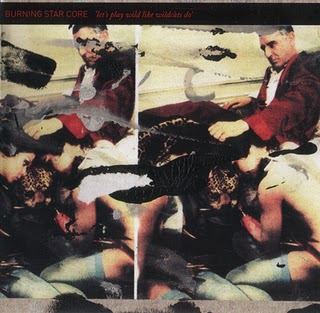 Two tracks here, both long-form explorations separated into their identifying parts - rhythm on 'Mes Soldats Stupides (demo)' and density on 'Clouds in My Coffee'. Both are richly textural, with 'Stupides' taking some chances with the introduction of MIDI instruments - drums and horns, combining into a relatively danceable bit of Burning Star Core sound. This was 2003-2004, and Yeh's prolific tape output at the time spat this out, originally on his own Dronedisco imprint. The CD reissue puts these tracks into a clear plateau, though the murky organ/synth on 'Clouds' sounds unfairly compressed. When the whirring stormclouds take over, they bury the menacing, circular tone at the centre of the track -- but then recede. And then reappear. It's a nice detail in a fairly minimal composition. Across both tracks, there's a fairly limited palette at play here, given the diversity of Yeh's regular work, but the mid-range synth feels like some sort of statement-straitjacket. There's a bit of 'You Really Got Me' in the 'Stupides' bass riff, but ten minutes in, it's replaced by some haunting drones, a good transition before 'Clouds'. A minor release moreso than an experiment, but not a bad one at all -- and showing a rarely-explored side of Burning Star Core with the sequenced beat. Disc face is a lovely Pantone blue that suggests a brighter sky than any of the sounds do.
Saturday, 5 June 2010
Vashti Bunyan - 'Just Another Diamond Day' (Spinney)
 It's rare for a CD reissue to lead to such a resurgence at it did for Vashti Bunyan - this CD was issued about ten years ago (at least that's when I think I got it) and before you know it, she's been embraced wholeheartedly by the experimental community and is suddenly making records with Devendra Banhart and Animal Collective. I've not listened to a post-1970 note of Vashti Bunyan but I think it's an interesting pairing because there is nothing remotely experimental about Just Another Diamond Day. At least, what I like about this record is its simplicity. These are simple songs, some barely over two minutes, with singsong melodies and rural-pastoral observations only occasionally given any more than a twee/Sallyangie treatment. When it does, like when Dave Swarbrick contributes fiddle to 'Where I Like to Stand', it's a wonderful combination. Bunyan's voice is so upfront and genteel, and it's rather reverb-laden, yet at the same time it's a bit weird because she does actually sing in a kinda nervous, rushed way. These songs don't really breathe and when there are string arrangements they feel even more cramped, which I actually like, though I don't know if that's exactly what she was going for. Joe Boyd's production is up to his usual standards and his use of vocal reverb is positively Krameresque. Simon Nicol's banjo on 'Come Wind Come Rain' is jaunty and works well against the wordless aspects of her singing, and I think I like these bits, which at least have perceptible edges, against the total softness of the recorder-driven tunes. These days I feel little to connect with lyrically; obviously the rural imagery speaks to some philosophy in people that I don't completely get. I've spent my own time in the Hebrides, and there is no place more beautiful, but these are not traditional Hebridean songs at all - this is an Englishwoman constructing an identity. I'm still not really sure why this is considered to be such outsider music. The arrangements of Dolly Collins make her records with Shirley much more exploratory, in my opinion - apart from the slight awkwardness, Vashti Bunyan is a very traditional folk-based singer-songwriter. I'm not saying this to sound negative - because even though I haven't listened to this CD in about 8 years, it's been a pleasant thing to revisit. This is one case where bonus tracks don't help - the original album presumably ended on 'Iris's Song For Us', which is a perfect last wave, but the CD sticks four more songs. The last is another version of 'Iris's Song', but one that's stuck a bit in it's own suspended particles, and not quite as effective as the original. But I guess you gotta put bonus tracks somewhere!
Subscribe to:
Posts (Atom)