
HEY! Get updates to this and the CD and 7" blogs via Twitter: @VinylUnderbite
Showing posts with label golden cinderblock award. Show all posts
Showing posts with label golden cinderblock award. Show all posts
Tuesday, 7 November 2017
Flop - 'World of Today' (Frontier)

Wednesday, 1 November 2017
Flop - 'Whenever You're Ready' (Sony 550/Frontier)

Thursday, 4 April 2013
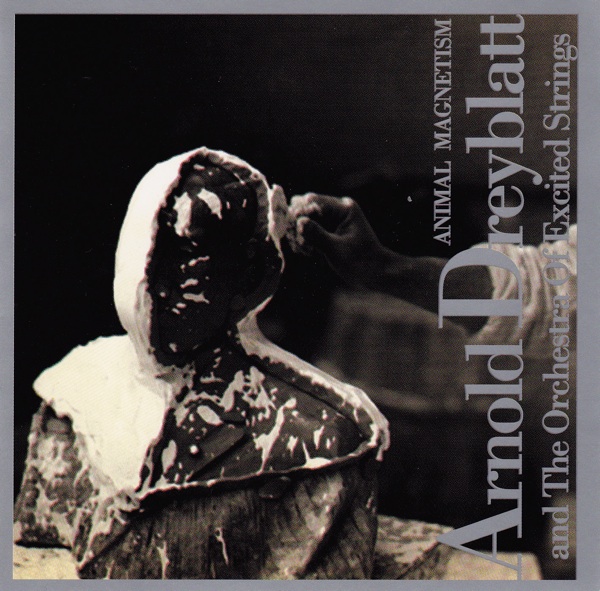
Arnold Dreyblatt - 'Animal Magnetism' (Tzadik)
Sunday, 24 June 2012
Destroyer - "Streethawk: A Seduction' (Misra)

Friday, 2 March 2012
The Dead C - 'Harsh 70s Reality' (Siltbreeze)

Thursday, 9 February 2012
Richard Davies - 'There's Never Been a Crowd Like This' (Flydaddy)

Monday, 17 October 2011
Dadamah - 'This is Not a Dream' (Kranky)

Tuesday, 14 June 2011
Consonant (Fenway)
 This Consonant album was one of the biggest surprises of 2002 for me, surfacing as a new Clint Conley-penned album of rock songs which was magic to those of us who worship at the altar of Burma. Nineteen years is a long time to hide away, and expectations were understandably low. The band had a guy from Bedhead and a guy from Come, but how good could the songs be? I guess if you spend nineteen years writing stuff, you're going to have twelve good tunes for a CD. But nothing could quite prepare me for how good this actually was. Or IS - because it still sounds absolutely great, a perfect merger of classic rock, 80's and 90's American guitar indie and a bit of the Burma fire. It's all love songs, of course, or rather contemplations of love and loss structured somewhat around these weird acrostic poems by Holly Anderson. There's bitterness seeping out of tunes like 'Call it L---' and 'Who Touches You Now?', but it's the more lunar language that kills me - a hopeless 40something romantic who is struggling to put things into context. Anderson's poems are built around the names of flowers and Conley has certainly adapted them well into rock phrasing, managing to sing lines like 'Cured but curious we embrace post-pathetic happiness: neutered, fixed, companionable' without it sounding as strange as it probably just did to read it. The fuzzy guitars, drum fills and amped-up energy ('Buckets of Flowers, Porno Mags'; 'That Boston Life') are raging with confidence and mastery; for an aging punk, there's no element of embarrassment. Chris Brokaw's guitars find the right places - for those of us who grew up with music that itself grew up on Burma, it's all just perfect. There's oodles of 'Trem Two' style moodiness, but still a hint of 'That's How I Escaped my Certain Fate'. And Roger Miller turns up a few times too. The pop hooks are there - not singsong like the Beatles but subtle, mind-burrowing lyrical fragments that I had bouncing around in my head for much of 2002. I remember having the 'We couldn't ever make enough / time for lips and hips and arms' following around my consciousness for so long that I was starting to go nuts; of course, for a song about the ghost of a relationship (and the song I refer to is the closing tune 'What a Body Could Do'), it's practically supernatural. 'Post-Pathetic' is an absolutely brilliant song, with a bit of college 80s jangle, sharp sharp sharp words, and a self-deprecating sexuality that gets better with every listen. It's the influencer meeting his influencees, and I was pretty much obsessed with this CD when it came out - my digipak is dinged and dented from taking it to work every day. Of course, I haven't played it for a few years which is why it feels so good and familiar now - I actually am on the third consecutive listen. Rock music connects when it's music and lyrics meeting in perfect balance, and that's what's here. I love lines like 'Wasn't she full of wild want / for is he and her she?' but even more when the band is providing the perfect presentation of it. My love for Consonant is pretty strong, and I realise a bit idiosyncratic, but just wait, cause there's gonna be lots of these as we go along.
Monday, 28 March 2011
The Coctails (Carrot Top)
 This is the final CD by the Coctails, the cover photo emulating their previous album Peel, only with a feeling of rot and decay here. This is an album that I hold close to my heart - an idiosyncratic, personal favourite that becomes more obscure with each passing year, but that I still feel a strong rapport with. Because I don't own anything else by this band, this is taken a bit out of context. The Coctails were a Chicago band in the early 90s who merged indie rock with eclectic instrumentation and jazz/lounge influence; their earlier LPs, such as Long Sound, were bouncy and owed a debt to Dave Brubeck and stuff like that. Peel took things into a somewhat more guitar-based territory, and then this masterpiece ends up almost totally eschewing the quirks of their early work (with the closest reference being 'Cadali', a jaunty tune that is lovely, but out of place here). The Coctails is a dour, depressed record that's about half-instrumental, half-vocal. There are bright spots - 'Circles' is a major-key instrumental with vibraphones and a really perfect, brief use of casio beats - but even this has a somber tone. The vocal tracks are set by the opening cut, 'When I Come Around' (released around the same time as the Green Day hit of the same name); your typical white-guy indierock vocalist, emoting despite not actually having a great singing voice. This is heard more clearly on 'So Low', where the singer (either Archer Prewitt, John Upturch or Barry Phipps; not really sure) bellows a dramatic dirge. I can't speak highly enough of how wonderful this record is, but I have been listening to it for almost 15 years. The credits reveal the source recordings to come from various points throughout the 90s - 'When I Come Around' and 'Never Knew' were actually recorded with Stuart Moxham back in 1993 (this album was released in '96). So rather than being a cohesive statement of melancholy, this was a collection of what didn't fit on the other records; whatever the motive, it ends up being the most rewarding work of their career (and I think it outclasses anything Prewitt did subsequently in the Sea and Cake or solo). This is guitar-based indie rock, with carefully chosen notes that ring out delicately like a Bedhead record. And like Bedhead's last album, there's one fuzzy stomper near the end of the record that would be out of place except it fits so perfectly - the grunge anthem 'Cast Stones', a snarled rant that feels more frustrated than angry. The Coctails is filled with moments of utter beauty, such as the delicate 'Starling' and the epic 'City Sun'; it closes with a Terry Riley moment, 'Last Organ'. It's a thick, elliptical organ drone, clearly intended as an elegy for the band who I think had broken up by the time this was released. At the time, I'm sure this album complemented the livelier tunes on their other records - completing the picture, and fleshing out the band into a more fully expressive unit. But since it's been at least a decade or more since I've heard even Peel, I'm left remembering the Coctails by this, their Sister Lovers.
Sunday, 19 December 2010
Chisel - '8 AM All Day' (Gern Blandsten)
 I was sixteen years old and my music friend (the man responsible for making me mixtapes which forever cemented my interest in mid-90s indie rock) was trying to get me into Superchunk. He had succeeded in showing me the ways of Pavement, Sebadoh and some minor cult faves who you will hear about later. Superchunk actually came to town during this period, but I didn't go, as I had yet to become hip to their sounds. My friend returned from the gig with his mind blown by the opening act, Chisel. I remember him saying "They took the stage and then played the most amazing songs I ever heard"; he snapped up both of their CDs and immediately dubbed them for me. Now I eventually did become a Superchunk fan, but it's because of Chisel that I regret missing that show (I would later see both bands). Now I've nearly doubled in age, but 8 AM All Day is one of those CDs that I've taken with me from place to place, pulling it out at least once a year for a trip down memory lane. It has become no less sweet with time. This is one of the prime artefacts from an era where I learned every millisecond of my favourite albums by heart, finding deep connections to the songs that tapped into a physicality and a lyrical connection as well. Yeah, that doesn't happen anymore. For one thing, I'm not sixteen anymore. I still remember every millisecond of this album and I'm glad I do! At the time, I didn't know much about the DC-area hardcore scene (of which Gern Blandsten, the label, was a player, releasing a bunch of other records though I can only remember Merel right now) or the history of mod-influenced power pop. Ted Leo has never shied away from his appreciation of Paul Weller or Joe Jackson but I didn't know any better then. All I knew was that 'The Dog in Me' was the perfect summation of everything I wanted indie rock to be. It was fast, and aggressive, with an awesome guitar solo/buildup at the end, backing vocals during the chorus that showed an appreciation of pop saccharine, and a line like "Trying to touch that sound/and not let it get me down/when nobody comes around". Of course that's magic to my ears, because this stuff was all part of a secret club for me, and I was on the outside looking in. Ah, this whole fucking album still stands up as a masterpiece to my older, jaded ears. The opening cut, 'Hip Straights', explodes with the line "Why don't we go walking for awhile?", intensifying in pitch and energy as the song goes on. I was amazed by Ted Leo's guitar playing - I thought at the time he was the best guitarist I had ever seen (it was 1997 when I finally saw them) because he could shred these inventive, fast licks and sing at the same time! 'What About Blighty?' was as fast and hardcore as I could take it then, and I still jump around when listening to it. 'Your Star is Killing Me' was on the first album (Nothing New, my copy of which seems to have disappeared) but re-done here with twice the energy. And then the immaculate 'Looking Down at the Great Wall of China From Way Up High in the Sky', whose lyrics are far more whiny and self-centered than such a grandiose title would indicate. The tempo cuts back for this one, and the endless guitar lead is like a knife slicing through butter. I didn't really know what 'emo' was at this time but this sure woulda been it! Even now I shouted out "I still care about her / yeah I really like her a whole whole lot" while listening, though typing it make me realise that at 16 I wasn't so concerned about fear of commitment. The rest of the album continues to be great. The title track has a brilliant cadence that almost re-works 'The Dog in Me', yet it's still a distinct song. 'Out for Kicks' is an actual reworking of a song from Nothing New, with new lyrics, and perhaps the most overtly Jam-styled number. And then the beautiful, beautiful closing pair of songs, 'Citizen of Venus' and 'Breaking Up with Myself'. Leo's songwriting was a better glimpse into the world I dreamt of than the bigger names like Malkmus or Barlow could manage; the emotions conveyed now pretty much summed up my life from age 18-22, when I was still listening to Chisel but a lot less frequently. So what happened to Chisel? They made another album which I anticipated like nothing else in the world, but was disappointed by; Ted Leo went on to a solo career that wasn't bad, but I never really got into except for one album (Hearts of Oak). I grew up and never stopped loving 8 AM All Day, and I love meeting others who share it with me. It's not the life-altering artistic statement of an Astral Weeks or even an Alien Lanes, but it's perfect nonetheless.
Thursday, 16 September 2010
Camberwell Now - 'All's Well' (ReR)
+All%27s+Well.jpg) Camberwell Now, what a band, what a moment in music, but what little splash they made! This CD, long sought-after by yours truly before it was finally reissued, compiles everything they recorded during their brief (1984-1986) existence. Now, here's a bias to lay up-front: I'm a massive This Heat fan, and I look to Charles Hayward as a magical musical force that did a lot for my own artistic and critical development. This Heat/Camberwell Now brought together a lot of concerns for me at just the right time in my life (my early 20's!). In the musical arena, they brought together ruthless sound experimentation with mindblowing musical chops - the balance is always perfect, as for every dazzling Hayward drum run comes some incredible use of musique concrete techniques. And lyrically, Hayward showed me that you can bridge fiery, political expression with poetry and the personal - I'd say that I now follow the "everything is political" philosophy, which is a great deal inspired by This Heat. So Camberwell Now was the somewhat more obscure followup band, whose lone LP The Ghost Trade I luckily scored from eBay about ten years ago, but whose other records remained unobtainable. The Meridian EP, which comprises the first 4 tracks of All's Well, is an open, tuneful Camberwell Now, and maybe the furthest removed from This Heat's post-punk caterwauls. The nautical theme is overabundant and years before all those midwestern indie rock bands started writing songs about boats, it's funny to hear Charles Hayward's approach. The trio format of This Heat, with Stephen Rickard on the tapes, is retained; what's different is that there's a more central rhythm, yet less rock structure here. It seems to emanate more directly from the intelligent 70s prog scene that Hayward came out of, but I think more of Rock Bottom than the Quiet Sun LP. Coming in the midst of Thatcherism, these songs about decaying empire and the exploitation of natural resources seem prescient, if not overtly obvious. A bit of digging under the surface is good, and the way these rhythms emerge it feels like waves, gently rocking. The instrumental 'Resplash' is where we get Camberwell Now starting to really amp things up. It gets a bit 'S.P.Q.R' at points, but puts on the brakes at just the right moments, building up massive caches of tension. It's the first really astounding track in a disc that's full of them, and it's like rock music has taken a major step forward. A bonus track, 'Daddy Needs a Throne', is inserted after Meridian, before Ghost Trade and clearly coming from the same sessions. This is when we start to really feel the manic, bass-driven rock of Camberwell Now's middle period. The song, in only 3 and a half minutes, somehow manages to address the difficulty of maintaining a working class family structure, while exploding in a cacophony of furious voices and electricity. But it's almost a teaser for 'Working Nights,' the leadoff cut from The Ghost Trade, which I'm glad to have on CD because my vinyl copy is practically worn through. This is the definitive Camberwell Now song, which is crazy because the first time I heard it I thought it reminded me of New Order! There is something lively and dancey here that This Heat never had, but it's so fucking intense and fast and magical and the bassline is like a choker necklace on your brain. I don't even know what else to stay here, but I know the LP will get listened to soon on Vinyl Underbite, so I'll save it for there. 'Sitcom' follows , assessing the state of progress in mid 80's Britain, and then the beautiful, understated 'Wheat Futures' closes out side 1. Except this is a CD, so we don't have to flip anything! 'Wheat Futures' is one of those songs where Hayward is singing/droning/intoning deeply and passionately, accompanied at first by an electric erhu and some keyboards, and it slowly builds to a slow series of musical thoughts, with a repetitive autoharp line to centre it. This is still somehow punk rock to me, but it's also folk and experimental and anything and everything. Hayward probably never plays drums as minimally as at the end of 'Wheat Futures', yet it's still folding in on itself in rhythmic complexity. 'Speculative Fiction', with it's cut-up vocalisings and electro-beat, at first sounds like the great sellout, but is actually an upright stride towards Valhalla. While still frantic, it's slow enough to breathe, with lots of studio/Rickard tricks, such as layers of bells and whistles, echoing drum fills, and nooks and crannies jumping out at all points. By the end it's a swirling maelstrom of the original electroclash hook and Haywards layered Ya-ya-yas. And then 'Ghost Lantern', whose lyrics aren't printed in the booklet for some reason yet this track continues The Ghost Trade's reliance on Trefor Goronwy's manic basslines and frantic guitar chops, with Hayward's crisp yet explosive drumming. And then 'The Ghost Trade', the 12 minute behemoth that ends the album of the same name. The first four minutes are a midtempo song, an indictment of global capitalism, post-Fordism and conspicous consumption. And then a slow xylophone line emerges from the keyboard smog and a plodding, instrumental coda takes us to the end. It's as beautiful as everything else here, which is to say it's also tense and strange and unusual. And then, the Greenfingers 12" to close out the disc! The title track is an explosive meditation on rural malaise, with punchy saxophones and a rock-solid beat that makes me violently tap my foot off the bottom of my desk when I listen to it. It feels a bit more fruity than what came before, perhaps a feeling carried on in 'Mystery of the Fence'. At this point, the band has expanded to a four-piece, with Maria Lamburn adding the sax, piccolo and viola. The textures are slightly more plastic, but it's 1986 after all - it's got that digital sheen on things, despite Lamburn's organic grounding. Goronwy's own tune, "Know How" comes next, which is a real 180 turn. His earnest, bright voice sounds like he should be in Tears for Fears, and the simple, minimal lyrics are much more commercially rooted than Hayward's use of language. There's a nice pulse behind everything, and I've come to really like this song over time. It's a weird sort of ending for the Camberwell Now, though I guess that would actually be the 35 second 'Element Unknown' which actually ends the disc. I realise this has been one of the longer and more passionate entries in the Constructor Bags to date, but I guess that's why I love music - because it gets me excited, inspired and totally fuckin' pumped! The booklet includes lyrics and a rather technical description of the tape switchboard, written by Rickard. I know that this is all that there is, but I still can't help myself from pining for some more deluxe edition (vinyl!) in the future.
Camberwell Now, what a band, what a moment in music, but what little splash they made! This CD, long sought-after by yours truly before it was finally reissued, compiles everything they recorded during their brief (1984-1986) existence. Now, here's a bias to lay up-front: I'm a massive This Heat fan, and I look to Charles Hayward as a magical musical force that did a lot for my own artistic and critical development. This Heat/Camberwell Now brought together a lot of concerns for me at just the right time in my life (my early 20's!). In the musical arena, they brought together ruthless sound experimentation with mindblowing musical chops - the balance is always perfect, as for every dazzling Hayward drum run comes some incredible use of musique concrete techniques. And lyrically, Hayward showed me that you can bridge fiery, political expression with poetry and the personal - I'd say that I now follow the "everything is political" philosophy, which is a great deal inspired by This Heat. So Camberwell Now was the somewhat more obscure followup band, whose lone LP The Ghost Trade I luckily scored from eBay about ten years ago, but whose other records remained unobtainable. The Meridian EP, which comprises the first 4 tracks of All's Well, is an open, tuneful Camberwell Now, and maybe the furthest removed from This Heat's post-punk caterwauls. The nautical theme is overabundant and years before all those midwestern indie rock bands started writing songs about boats, it's funny to hear Charles Hayward's approach. The trio format of This Heat, with Stephen Rickard on the tapes, is retained; what's different is that there's a more central rhythm, yet less rock structure here. It seems to emanate more directly from the intelligent 70s prog scene that Hayward came out of, but I think more of Rock Bottom than the Quiet Sun LP. Coming in the midst of Thatcherism, these songs about decaying empire and the exploitation of natural resources seem prescient, if not overtly obvious. A bit of digging under the surface is good, and the way these rhythms emerge it feels like waves, gently rocking. The instrumental 'Resplash' is where we get Camberwell Now starting to really amp things up. It gets a bit 'S.P.Q.R' at points, but puts on the brakes at just the right moments, building up massive caches of tension. It's the first really astounding track in a disc that's full of them, and it's like rock music has taken a major step forward. A bonus track, 'Daddy Needs a Throne', is inserted after Meridian, before Ghost Trade and clearly coming from the same sessions. This is when we start to really feel the manic, bass-driven rock of Camberwell Now's middle period. The song, in only 3 and a half minutes, somehow manages to address the difficulty of maintaining a working class family structure, while exploding in a cacophony of furious voices and electricity. But it's almost a teaser for 'Working Nights,' the leadoff cut from The Ghost Trade, which I'm glad to have on CD because my vinyl copy is practically worn through. This is the definitive Camberwell Now song, which is crazy because the first time I heard it I thought it reminded me of New Order! There is something lively and dancey here that This Heat never had, but it's so fucking intense and fast and magical and the bassline is like a choker necklace on your brain. I don't even know what else to stay here, but I know the LP will get listened to soon on Vinyl Underbite, so I'll save it for there. 'Sitcom' follows , assessing the state of progress in mid 80's Britain, and then the beautiful, understated 'Wheat Futures' closes out side 1. Except this is a CD, so we don't have to flip anything! 'Wheat Futures' is one of those songs where Hayward is singing/droning/intoning deeply and passionately, accompanied at first by an electric erhu and some keyboards, and it slowly builds to a slow series of musical thoughts, with a repetitive autoharp line to centre it. This is still somehow punk rock to me, but it's also folk and experimental and anything and everything. Hayward probably never plays drums as minimally as at the end of 'Wheat Futures', yet it's still folding in on itself in rhythmic complexity. 'Speculative Fiction', with it's cut-up vocalisings and electro-beat, at first sounds like the great sellout, but is actually an upright stride towards Valhalla. While still frantic, it's slow enough to breathe, with lots of studio/Rickard tricks, such as layers of bells and whistles, echoing drum fills, and nooks and crannies jumping out at all points. By the end it's a swirling maelstrom of the original electroclash hook and Haywards layered Ya-ya-yas. And then 'Ghost Lantern', whose lyrics aren't printed in the booklet for some reason yet this track continues The Ghost Trade's reliance on Trefor Goronwy's manic basslines and frantic guitar chops, with Hayward's crisp yet explosive drumming. And then 'The Ghost Trade', the 12 minute behemoth that ends the album of the same name. The first four minutes are a midtempo song, an indictment of global capitalism, post-Fordism and conspicous consumption. And then a slow xylophone line emerges from the keyboard smog and a plodding, instrumental coda takes us to the end. It's as beautiful as everything else here, which is to say it's also tense and strange and unusual. And then, the Greenfingers 12" to close out the disc! The title track is an explosive meditation on rural malaise, with punchy saxophones and a rock-solid beat that makes me violently tap my foot off the bottom of my desk when I listen to it. It feels a bit more fruity than what came before, perhaps a feeling carried on in 'Mystery of the Fence'. At this point, the band has expanded to a four-piece, with Maria Lamburn adding the sax, piccolo and viola. The textures are slightly more plastic, but it's 1986 after all - it's got that digital sheen on things, despite Lamburn's organic grounding. Goronwy's own tune, "Know How" comes next, which is a real 180 turn. His earnest, bright voice sounds like he should be in Tears for Fears, and the simple, minimal lyrics are much more commercially rooted than Hayward's use of language. There's a nice pulse behind everything, and I've come to really like this song over time. It's a weird sort of ending for the Camberwell Now, though I guess that would actually be the 35 second 'Element Unknown' which actually ends the disc. I realise this has been one of the longer and more passionate entries in the Constructor Bags to date, but I guess that's why I love music - because it gets me excited, inspired and totally fuckin' pumped! The booklet includes lyrics and a rather technical description of the tape switchboard, written by Rickard. I know that this is all that there is, but I still can't help myself from pining for some more deluxe edition (vinyl!) in the future.
Monday, 22 March 2010
Boredoms - 'Vision Creation Newsun' (Birdman)
 My god, it's been ten years since this beast from the East was unleashed! This was the Boredoms' big reinvention, or for those listening more carefully, the next logical step in their progression. Super Roots 7 (or was it 8?) started off with the formula - long, extended pieces built around polyrhytmic insanity, with the usual shrill electronics, pulsing organs and disembodied voices layered in slow crescending waves. Vision Creation Newsun expands it to a whole double album-length, and the result is astounding. I remember getting this CD back in college and totally losing my shit over it. It was also one of the first "big" albums that I heard in its entirety via NAPSTER before it was released domestically though I don't know if that is somehow significant. Maybe I can say that this was a record that changed the way I heard music, arriving at a time when the ways we listen to music were changing. Ugh, I'm starting to sound like one of those shitty Sirius/XM sattelite radio commercials! So on to Vision Creation Newsun: If you wanna talk about a perfect melting between the electronic and organic, this is it. The untitled tracks flow together into one cohesive whole, though there are certainly highlights. The opener is a statement of purpose, with it's sweeping filter banks defining the Boredom's new temple. Track 3 builds up a repeating, ascending riff like something out of Can or Neu! but filtered through Marginal Consort. Throughout everything, the 'anything goes' mentality is scaled back a bit and the emphasis is on duration instead of the short-attention span pyrotechnics that the Boredoms practiced in the early 90s. And oh, what a result. There's thick waves of organ, reverb-affected guitars, bells and percussion galore, and lots of voices that slip away into a distant sea. Best of all are these weird parts that go into power-rock sections - jamming on one long riff over a steady 4/4, or the recurring two-note monotony that makes up track 6's main theme. This organic onigiri is also wrapped in a great deal of digital processing, but somehow the choppy skipping feels more akin to a tremelo effect, the disjointed ebb and flow of accelerated consciousness. Talk about music for a new millenium, that simultaneously looks ahead and back! Energy courses through everything - even the ocacsional acoustic instrumentation that pops up, or the smooth groove singing on track 7 -- it's still raging with a spastic fury. What's different from Pop Tatari is they've learned how to channel this energy into some cosmic third eye consciousness without compromising their uber-modern exuberance. This pumps me up as much as the greatest hardcore records, and somehow stirs my soul in the same way as the greatest works of Riley, LaMonte, etc. After this, the Boredoms never were quite as special for me - the bang-on-everything percussion attitude was taken a bit further and the results, while occasionally very impressive, somehow lack the magic of this.
Sunday, 19 July 2009
Robert Ashley - 'Automatic Writing' (Lovely Music)
 I went on holiday in 2001 to Scotland, and visited a friend there. Among other conversational items, he mentioned that he had just purchased a secondhand LP of Automatic Writing but he wasn't "into" it and was going to sell it. Neither my traveling companion nor myself had ever heard it, so he put it on the turntable and we opened some beers. After ten minutes or so my traveling companion and I both expressed our amazement at what we were hearing and we both offered to buy the unwanted record from my friend. When faced with our enthusiasm, said friend re-evaluated his feelings and refused to sell it to us. So I went back to America emptyhanded, though as soon as I could get my ass to Twisted Village (or maybe it was Other Music in NYC?) I bought the CD reissue, which tacked on bonus tracks 'Purposeful Lady Slow Afternoon' (1968) and 'She Was a Visitor' (1967). Some years later I found the LP for cheap but I never unloaded this CD, which means it's going to get reviewed immediately after this on Dislocated Underbite et al. But that's okay - I don't mind listening to this twice in a row, because there's something really amazing about this recording that still affects me as much as it did eight years previously. The CD liner notes, by Ashley, explain his mild form of Tourette's syndrome and his interest in involuntary speech, though he admits that attempting to do performances with involuntary speech results in 'fake' involuntary speech, since it's a performance after all, etc. you know. Anyway, he spent five years "composing" this, which consists of voice by himself and Mimi Johnson, Ashley's voice being electronically manipulated mumbling and gurgling and Johnson's being whispered French text. On that surface you have a brilliant, surreal low-listening mindfuck that wins points in sound poetry circles as well as the avant-text circuit; but what really blows my mind about this record is the "music" in the background. For at least part of the record, a distant booming rhythm loop is present, but it's recorded in a way that makes it sound exactly like your next-door neighbor is listening to some shitty groove/dance record. Now read those italicised words again and let them sink in. And if you haven't heard Automatic Writing you're no doubt asking yourself "So?" Which goes to illustrate how futile it is to convey the sound experience through language. Because this distant rhythm is what moves this music into the arena of something special and indescribable - I cannot explain just how good it is, or why, or what the big deal is. Certainly the whole package with the mumbling and the weird electronics ticks all the boxes of conceptual art, surrealism, outsider art, and electronic fuckery that is interesting. But there's also something extremely anti-musical about it, and maybe this rhythm is what makes me feel this way (because it's music being used to oppose music, or something). And another thing is that I think this succeeds enormously as the conceptual/brainy/avant-garde theatre piece it was composed as, but it also succeeds without all of that attached to it - as a pure piece of sound to lose oneself in and draw inspiration from. Now I should probably save my raving for the LP version and focus on these bonus tracks, but the truth is, they've never done much for me. In fact, nothing of Ashley's apart from this and In Sara Mencken, Christ and Beethoveen there were men and women (which slays!) has ever interested me. The benefit of having this on CD is that you don't have to flip the record, this making it the perfect record to fall asleep to and inspire your own involuntary speech - except you have to program your CD player not to play tracks 2 or 3 which is a bit of a drag. I've listened to this many times, usually at low volume so the French whispering is just static, but now I've noticed it seems to keep repeating 'Qu'est-ce c'est tu caché?' or something like that, which even my high school French can tell is 'What have you hidden?' (or something like that). And maybe that's just made this even better.
Monday, 4 May 2009
Alva - 'Fair-Haired Guillotine' (Avant)
 Source: Bought from Paul's in the late 90's for (I think) around $20, new (Japanese import)
Some records exist outside of any conceivable time-space continuum and Alva's two compact discs are as magnificent as a 7-11 Slurpee overturned on the saddle of a racehorse. Those weirdo Czech Tom and Jerry cartoons might have done better with Fair-Haired Guillotine's bouncier moments insteada whatever freejazz they had. But it's not all animated: there's some amateurish guitar strum, tin whistle and church organ that would creep out any impressionable tyke. These gals could be compared to any number of precedents: LAFMS, Futura records, Ralph label, Very Good Records -- but the comparison would be imperfect. Cause Alva's music is more baroque, more constructed, and recorded with more panâche than most others. For tracks as simply constructed as this - the instruments are clear, there are few mysteries as to what is generating the sounds - there is a world of strangeness in every second. They weren't the first band to paint a sky of looped mumbled vocals, renaissance violin, and melting honkytonk fumes but this is both hi-brow and no-brow at the same time. Obviously these ladies made quite an impression on me so maybe I've put them on some sort of pedestal, but the sounds can speak for themselves.
Subscribe to:
Posts (Atom)