
HEY! Get updates to this and the CD and 7" blogs via Twitter: @VinylUnderbite
Showing posts with label quiet storm. Show all posts
Showing posts with label quiet storm. Show all posts
Wednesday, 10 September 2014
Fall of Saigon (Gazul)

Wednesday, 19 October 2011
Damon & Naomi - 'with Ghost' (Sub Pop)

Monday, 23 August 2010
Burning Star Core - 'Let's Play Wild Like Wildcats Do' (Hospital/RRR)
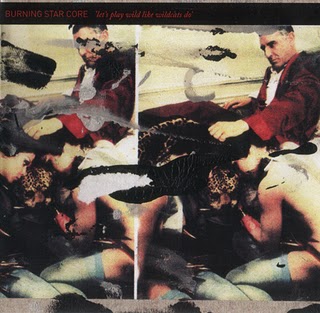 Two tracks here, both long-form explorations separated into their identifying parts - rhythm on 'Mes Soldats Stupides (demo)' and density on 'Clouds in My Coffee'. Both are richly textural, with 'Stupides' taking some chances with the introduction of MIDI instruments - drums and horns, combining into a relatively danceable bit of Burning Star Core sound. This was 2003-2004, and Yeh's prolific tape output at the time spat this out, originally on his own Dronedisco imprint. The CD reissue puts these tracks into a clear plateau, though the murky organ/synth on 'Clouds' sounds unfairly compressed. When the whirring stormclouds take over, they bury the menacing, circular tone at the centre of the track -- but then recede. And then reappear. It's a nice detail in a fairly minimal composition. Across both tracks, there's a fairly limited palette at play here, given the diversity of Yeh's regular work, but the mid-range synth feels like some sort of statement-straitjacket. There's a bit of 'You Really Got Me' in the 'Stupides' bass riff, but ten minutes in, it's replaced by some haunting drones, a good transition before 'Clouds'. A minor release moreso than an experiment, but not a bad one at all -- and showing a rarely-explored side of Burning Star Core with the sequenced beat. Disc face is a lovely Pantone blue that suggests a brighter sky than any of the sounds do.
Sunday, 14 March 2010
Black Sun Ensemble (Camera Obscura)
 Guitar Jesus comes to life in this debut release, reissued in the 90s with some bonus tracks and resequencing from the original mid-80s private press. Black Sun Ensemble occupy a unique, sun-drenched southwestern band of instrumental psychedelia. They're confident enough in Guitar Jesus's licks that there's little need for effects, studio fuckery or vocals. What this really is about is the guitar playing, and some of the songs are fairly improvised over a rhythm section that locks into similar chord progressions and patterns on every song. The end result is a patchwork of blistering electric guitar solos, glistening hollow-body/12-string blankets, and tunes that all kinda sound the same. The liner notes subtitle each track with descriptions like 'Wacko guitar solo', 'Improvisation in C scale', 'Blues in B Minor' etc. but somehow it all melts into a unified whole. I bought this when it came out after reading a review that praised it as first-rate psychedelia, but at the time I thought all psychedelia had to be insanely exaggerated mind-bends or maximallist pop like Mercury Rev or something -- I found this kinda downbeat, not disappointing per se, but not what I expected either. But I still liked it because I was also going through my Fahey/Americana-guitar phase, and I realised that this was a record to bridge the two schools. Guitar Jesus knows he's the star and he's mixed so far up that everything else sounds like an afterthought. If there's one criticism it is that the Black Sun Ensemble defined their sound too much, because the weird strum-pattern is so similar from track to track that it feels almost limiting. I know they made later records and I think still exist to this day (though Guitar Jesus is the only one remaining) so maybe they branched out since this was recorded (which was 1985). Much of the 'success' of this CD, to these ears, is owed to the early 80's DIY recording quality. You're really in the room with these guys, yet it still somehow captures the 'Dove of the Desert' feel (to borrow a phrase from track 5). There's something 'inside' about this psychedelia and it's a great mood-setter in the midst of a long winter. Liner notes by Byron Coley!
Tuesday, 6 October 2009
Bedhead - 'The Dark Ages' (Trance Syndicate)
 'The Dark Ages' last a few hours according to the lyrics and that's all the time that's needed to erase memories, but mine will last forever. My college years are filled with them - memories of listening to this and Beheaded and some Low albums at 3 AM and thinking about how amazing it is that there are rock bands who like to be quiet and nuanced. "Perfect music for 3 AM!" I would always say, certainly moreso than the KLF's take. Plus there's memories of my own hands, snaked along a Mexican Telecaster neck in dingy basements as my fingers pluck out slow, snaking melodies lifted from Bedhead records (not note-for-note, but lifting the general feel, dig?). 'The Dark Ages' might be my favorite Bedhead song; the drums pound along with a steady beat and switch to a ride-cymbal heavy pattern during the chorus, which is when the leaves fall from treetops and let light into the forest. By the end it's crescendoed into a crunchier, more powerful version of the same chords, but it resists the temptation to totally rock out and cuts things off right when the fire is in sight. 'Inhume' also does the slow build, instrumentally, with feedback entering like a muted trumpet. The chords shift slowly, emerging with distinct personalities, and this is music for guitar bands, indeed. Maybe one of the reasons I never got into Mogwai was that their quiet/loud thing always seemed too easy and much less controlled than Bedhead's approach. Actually I probably never thought about it that much -- really, I was just ready move on by the time Mogwai hit the scene. There's only three songs on The Dark Ages but all three are fully satisfying. 'Any Life' is the last and it brings back the slight country and western tendencies that have crept up in the past two CDs. It's just a twangy guitar lead, almost playing the role of a pedal steel, but it's enough to flavour this tune, a gentle vocal-driven meditation that ends this EP on an understated note. But these guys are the masters of understatement, after all.
Subscribe to:
Posts (Atom)